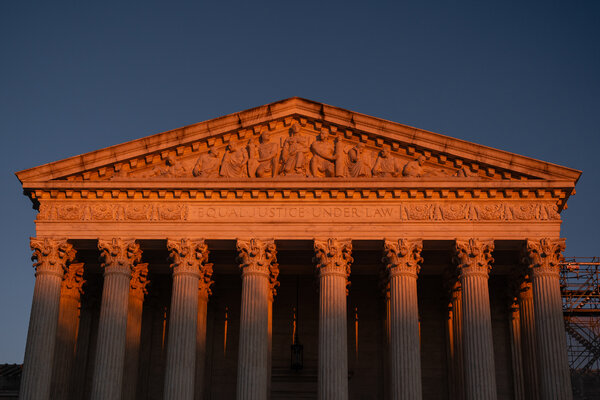
U.S. Supreme Court: Key Developments and Cases in May 2025

⚖️ Major Supreme Court Cases
Introduction
As of May 2025, the U.S. Supreme Court has been at the forefront of several significant legal battles, addressing issues ranging from immigration and federal workforce management to environmental regulations and civil rights. These cases not only have profound implications for U.S. law but also reflect the Court’s evolving interpretations of the Constitution and federal authority.
1. Birthright Citizenship
The Court is deliberating on whether federal judges can issue nationwide injunctions, a procedural issue central to President Trump’s executive order aimed at ending birthright citizenship. During oral arguments, justices questioned the administration’s legal strategy. Justice Amy Coney Barrett, appointed by Trump, sided with the liberal justices, signaling a potential shift in her judicial approach.
The Trump administration’s executive order aiming to end birthright citizenship for children born in the U.S. to non-citizen parents has reached the Supreme Court. This move challenges the 14th Amendment’s guarantee of citizenship to all persons born on U.S. soil. While the Court has yet to issue a final ruling, oral arguments have highlighted divisions among the justices, with some expressing concerns over the executive’s authority to alter constitutional interpretations.
2. Federal Workforce Downsizing
The Trump administration has requested the Supreme Court to lift a temporary restraining order that halted efforts to reduce the federal workforce. The restraining order was issued due to concerns over significant operational impacts across federal agencies. At least 75,000 federal workers have exited via deferred resignation, and many probationary staff have been dismissed.
President Trump’s administration has requested the Supreme Court to lift a temporary restraining order that halted efforts to reduce the federal workforce. The restraining order was issued due to concerns over significant operational impacts across federal agencies, including delays in disaster inspections and service interruptions in programs like Social Security. The Justice Department argues that the restraining order improperly limits the president’s legal powers to reorganize the federal workforce.
3. Ghost Gun Regulation
The Court upheld the Biden administration’s regulation requiring background checks, serial numbers, and sales records for “ghost guns”—untraceable firearms assembled from parts kits. This decision marks a departure from previous rulings that loosened firearms restrictions. (The Washington Post)
4. Flavored E-Cigarette Ban
In a unanimous decision, the Court ruled that the Food and Drug Administration (FDA) properly rejected applications by two companies to market candy- and dessert-flavored e-cigarette liquids. The ruling aims to curb youth vaping, which has been a growing concern among health officials.
The Court found that the FDA’s actions were consistent with the Administrative Procedure Act, reinforcing the agency’s authority to regulate tobacco products aimed at youth. Wikipedia
5. Environmental Protection Agency (EPA) Water Regulations
The Court struck down generic regulations required as part of permits that the EPA issues for cities and businesses to discharge pollution into certain bodies of water. The decision limits the EPA’s authority in regulating water pollution.
The Court ruled that the Environmental Protection Agency (EPA) exceeded its authority under the Clean Water Act by imposing generic water quality standards without specific limits. This decision limits the EPA’s ability to enforce broad environmental regulations without clear legislative backing.
6. Death Row Inmate Retrial
The Court ordered a new trial for Richard Glossip, a death row inmate in Oklahoma, after the state attorney general confessed to errors in the prosecution’s case. The decision highlights the Court’s commitment to ensuring fair trials and due process.
7. Use of the Alien Enemies Act
The Supreme Court has extended a temporary block on the Trump administration’s use of the Alien Enemies Act to deport migrants. This decision underscores the Court’s commitment to ensuring due process rights for individuals facing deportation under the Act, which dates back to the 18th century. Al Jazeera
📰 Recent News
-
Trump’s Warning to Supreme Court Justices:
President Donald Trump issued a strongly worded message warning Supreme Court justices against being influenced by Democratic efforts to challenge his policies. He implied that public support would favor justices ruling in his favor, despite polling and electoral data showing a narrow 1.5% win in 2024.
-
Extension of Deportation Block for Venezuelan Migrants:
The Supreme Court extended a deportation block for a group of Venezuelan migrants who were targeted under the Alien Enemies Act. The Court referred the case to a federal appeals court without making a final decision, highlighting ongoing legal debates over the use of the 18th-century law.
Conclusion
The Supreme Court’s decisions in May 2025 reflect its pivotal role in shaping U.S. law across various domains. As the Court continues to address these critical issues, its rulings will undoubtedly influence the legal landscape and the balance of powers between the federal government and individual rights.